China has become a major sourcing market for professional 808nm Diode Laser Hair Removal equipment. Its suppliers serve clinics, beauty centers, distributors, and medical aesthetics businesses worldwide. Yet factory size alone does not prove product quality.
This introduction presents a practical starting point for reviewing China’s top ten suppliers. The selection should consider manufacturing experience, engineering capability, product consistency, and transparent business records. Public information can be incomplete. That matters.
A reliable supplier should provide clear specifications for wavelength stability, fluence, pulse width, handpiece durability, and cooling performance. Buyers should also examine sample treatment results, factory testing procedures, warranty terms, and spare-part availability. Small details matter, such as whether the display remains readable under bright clinic lighting. After-sales response matters more.
Compliance deserves careful attention. Suppliers should offer relevant technical files, quality-management evidence, electrical safety documentation, and market-specific certifications where applicable. These documents require independent verification, not blind acceptance. Qualified professionals must operate the equipment according to local regulations and approved instructions.
The companies discussed in this guide are not presented as universally perfect. A supplier may offer strong hardware but weak training support. Another may provide excellent customization but longer production times. Prices also change with components, order volume, and exchange rates. Therefore, this list should support due diligence rather than replace it.
We will compare product ranges, technical strengths, customization options, certifications, export experience, and customer support. The goal is practical judgment. A careful buyer looks beyond polished brochures and asks measurable questions. That habit often prevents expensive surprises.
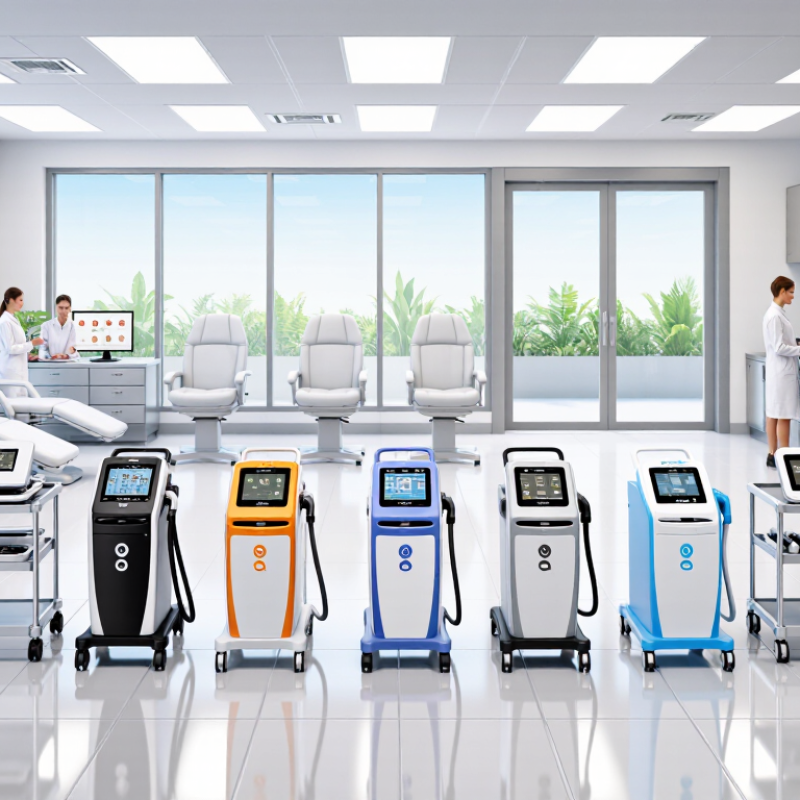
China Top 10 808nm Diode Laser Hair Removal Suppliers
808nm diode laser systems use selective photothermolysis. Melanin in the hair shaft absorbs light energy. Heat then travels toward the follicle, weakening future growth. The wavelength offers a practical balance between penetration and epidermal protection. Clinical reviews commonly report 70–90% long-term hair reduction after several treatments, although outcomes vary by hair thickness, skin tone, hormones, and treatment intervals. The American Society for Dermatologic Surgery highlights hair removal as a frequently requested non-invasive procedure in its annual consumer survey.
Reliable suppliers should document pulse width, fluence, cooling performance, and handpiece stability. IEC 60601-2-22 provides relevant safety requirements for medical laser equipment. However, specifications alone do not prove clinical performance. A device may show high power on paper but deliver uneven energy across the treatment window. That detail matters.
Tips: Check third-party test reports, calibration records, and service response times. Request evidence from independent clinical evaluations, not only factory images. Patch testing remains essential, especially for darker skin or recently tanned patients. Cooling should feel consistent, not painfully cold. Some operators over-treat stubborn areas. That can increase irritation without improving results. Careful settings and honest follow-up are more valuable than impressive numbers.
China Top 10 808nm Diode Laser Hair Removal Suppliers
Key Features of China’s 808nm Diode Laser Suppliers
China’s leading 808nm diode laser suppliers usually focus on stable energy delivery, practical cooling, and operator safety. The 808nm wavelength targets hair follicles effectively, while adjustable fluence and pulse width support different skin and hair conditions. A clear touchscreen helps operators control treatment settings without unnecessary steps. Some systems also offer large spot sizes, shortening treatment time on areas such as the legs or back.
Cooling performance matters greatly. Sapphire contact cooling can reduce surface discomfort and protect the skin during repeated pulses. Reliable suppliers should provide test reports, electrical safety documents, user manuals, and traceable production records. They should also explain maintenance schedules and replacement-part availability. A low purchase price may look attractive, but it can hide weak training or delayed technical support. That risk deserves honest attention.
Tips: Ask for a live device demonstration before ordering. Check whether the handpiece remains cool after continuous operation. Request sample treatment protocols, but adapt them to professional assessment and local regulations. Verify warranty terms in writing. Small details matter. Also, do not judge quality from appearance alone; a bright screen cannot prove consistent output. Supplier communication may seem convincing, yet independent inspection is still worth considering.
The chart presents common nominal power configurations used in commercial 808nm diode laser hair-removal systems. Typical systems use an 808nm diode wavelength, adjustable pulse duration and fluence, and sapphire contact cooling. The figures are technical reference values rather than supplier or brand rankings.
Higher nominal power can support faster treatment coverage, while actual results also depend on spot size, fluence, pulse width, cooling performance, and treatment protocol.
China’s 808nm diode laser sector serves clinics, salons, and private-label distributors worldwide. Fortune Business Insights estimated the global laser hair removal market at about USD 1 billion in 2023. Its forecast also indicates continued growth through 2030. Chinese suppliers compete through modular designs, fast production, and flexible customization.
The ten leading supplier profiles show different strengths. One focuses on single-wavelength 808nm systems for stable melanin absorption. Another offers 755nm, 808nm, and 1064nm platforms for varied skin types. A third supplies high-power diode stacks with temperature monitoring. The fourth develops compact machines for small salons. The fifth specializes in water-cooled handpieces and large treatment areas. The sixth produces air-cooled units with simpler maintenance. The seventh provides portable systems with wheeled cabinets. The eighth emphasizes ISO 13485-based manufacturing controls. The ninth supports private-label casing, software, and user-interface changes. The tenth builds integrated clinic platforms with treatment records and adjustable pulse settings.
Details matter. IEC 60601-1 testing supports electrical safety, while IEC 60601-2-22 addresses laser equipment requirements. Buyers should request test reports, calibration records, and measured output data. A 2024 industry review by Research and Markets highlighted customization and home-use technology as important market trends. However, supplier brochures may overstate fluence or lifetime. That deserves skepticism. In practice, cooling stability, handpiece contact, warranty response, and operator training often matter more than headline power. Temperature logs and beam consistency reveal weaknesses quickly. A perfect specification sheet is not always a perfect machine.
China’s 808nm diode laser hair removal market is expanding rapidly. Grand View Research estimated the global laser hair removal market at about USD 1.03 billion in 2023. This growth makes supplier screening more important, not easier.
Start with documented quality systems.
Request a valid ISO 13485 certificate, then check its scope, issuing body, and expiry date. A certificate alone proves little. Review production records, calibration logs, complaint handling, and batch traceability. Ask whether optical power meters receive regular calibration. Small gaps can become serious risks.
Safety evidence should include IEC 60601-1, IEC 60601-1-2, and IEC 60825-1 testing, where applicable.
Request reports for electrical safety, electromagnetic compatibility, laser classification, cooling performance, and emergency shutdown. Confirm that fluence, pulse duration, and temperature controls match the technical file. ISO 14971 risk-management records are also valuable.
The FDA’s MAUDE database shows why post-market monitoring matters, although its reports cannot prove causation. No checklist is perfect. Factory video calls help, but independent audits reveal more.
Insist on sample testing before large orders, with written acceptance limits and user manuals in clear English.
Purchasing an 808nm diode laser requires more than comparing catalog prices. Global buyers should verify wavelength stability, output power, pulse width, spot size, and fluence adjustment. These specifications affect treatment consistency and operator control. Ask for laboratory test reports, calibration records, and clear technical data. Vague performance claims deserve caution.
Cooling performance is equally important. Request details about sapphire contact cooling, water circulation, temperature monitoring, and emergency shutdown functions. A sample demonstration can reveal handpiece weight, screen readability, and heat buildup after repeated shots. Small details matter. Buyers should also confirm electrical compatibility, plug standards, packaging quality, and shipping protection. A damaged device creates delays and unexpected costs.
Regulatory documentation must match the destination market. Check applicable safety certifications, electrical reports, user manuals, and importer responsibilities before placing an order. Training should cover skin assessment, parameter selection, contraindications, maintenance, and incident handling. Do not accept a certificate without verifying its issuing organization. Warranty terms should state response times, replacement parts, remote support, and service coverage. Consumable prices also affect the real ownership cost. A low quotation can mislead me when spare handpieces or cooling components are expensive. I would compare total costs over three years, not only the initial invoice. Supplier communication should be tested before payment. Slow replies may become a serious service problem later. Even experienced buyers can overlook local registration requirements. That mistake deserves a deliberate check.
Melanin in the hair shaft absorbs the light. Heat then travels toward the follicle. Future growth becomes weaker. The process is selective. Nearby skin receives less energy when settings are appropriate.
Several treatments are usually required. Long-term reduction may reach about 70–90% in some reviews. Results vary. Hair thickness, skin tone, hormones, and treatment timing all matter. Complete removal should not be promised.
It may suit many skin types, but settings must be adjusted carefully. Darker or recently tanned skin needs special caution. A patch test is essential. Skin assessment should happen before treatment.
Check wavelength stability, pulse width, fluence, spot size, and measured output. Ask for laboratory reports and calibration records. Factory photos prove little. Uneven energy delivery can affect treatment quality.
Cooling helps protect the skin surface and improve treatment comfort. Ask about contact cooling, water circulation, temperature monitoring, and emergency shutdowns. Cooling should feel steady. Painfully cold is not automatically better.
Hold the handpiece. Check its weight and screen readability. Observe heat buildup after repeated shots. Watch whether the cooling remains stable. Small details matter. I could still overlook one during a rushed test.
Test communication before payment. Confirm warranty response times, replacement parts, remote support, and service coverage. Training should include skin assessment and maintenance. Slow replies may become a serious problem later.
Compare the initial price with shipping, spare parts, cooling components, training, and maintenance. Review costs across three years. A low quotation can mislead buyers. The cheapest machine may not be the least expensive choice.
Request verified electrical safety reports, laser equipment testing, manuals, and destination-market documents. Confirm the issuing organization independently. Local registration duties may also apply. Certificates deserve checking, not blind trust.
Avoid using excessive settings on stubborn areas. More energy may increase irritation without improving results. Record parameters and follow up honestly. Results can be uneven. That limitation should be discussed clearly.
This article presents a practical overview of 808nm Diode Laser Hair Removal, explaining how the 808nm wavelength targets hair follicles while helping protect surrounding skin when used with appropriate cooling and professional settings. It introduces the main technical features commonly found among leading Chinese suppliers, including stable diode performance, adjustable energy and pulse controls, ergonomic handpieces, cooling systems, user-friendly interfaces, and options designed for different treatment areas and skin types.
The article also compares the product offerings of ten Chinese suppliers without focusing on brand promotion, highlighting differences in configuration, customization, manufacturing capacity, and after-sales support. For global buyers, it outlines how to assess supplier quality through documentation, safety testing, quality management systems, production standards, warranty terms, training, and service responsiveness. It concludes with key purchasing considerations such as intended market, regulatory requirements, total cost, maintenance, shipping, spare parts, and long-term supplier reliability.
UNT TECH