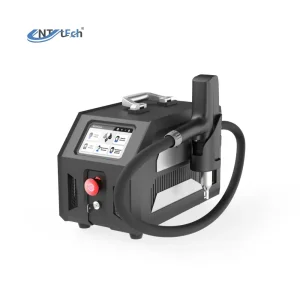
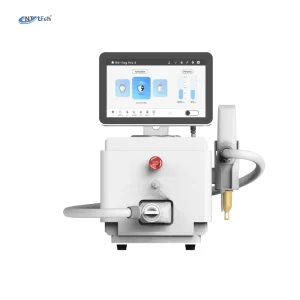
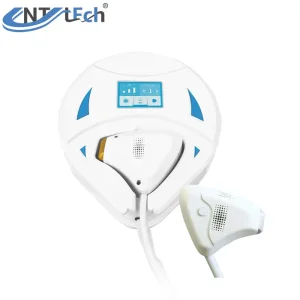
The global aesthetic dermatology sector is experiencing a structural paradigm shift from legacy nanosecond Q-switched pulse laser systems to ultra-short picosecond photomechanical technology. Driven by heightened patient demands for reduced downtime, zero post-inflammatory hyperpigmentation (PIH), and higher pulse efficacy, medical clinics and equipment distributors require rigorous insight into technical parameters, safety certifications, and supply chain dynamics.
As a high-tech pioneer headquartered in Beijing with global service networks including our APEX European Hub in the Netherlands, Beijing UNT Technology Co., Ltd. presents this technical analysis. This whitepaper evaluates the optical physics, clinical application matrices, international certification standards (CE MDR, FDA 510(k), ISO 13485), and Chinese manufacturing efficiencies that define modern picosecond laser manufacturing.
Understanding the transition from photothermal heat reliance to pure acoustic wave fragmentation for optimal clinical outcome.
Traditional Q-switched lasers operate in nanoseconds (10⁻⁹s), relying heavily on photothermal effect which raises surrounding tissue temperatures, causing thermal damage and higher PIH rates. Modern Picosecond lasers compress pulse duration into picoseconds (10⁻¹²s), producing high peak power that generates a Photo-Acoustic Shockwave.
Advanced clinical platforms require tailored optical wavelengths to target specific chromophores (melanin, hemoglobin, synthetic inks) across varying dermal depths:
Through specialized Diffractive Lens Arrays (DLA) or Micro-Lens Arrays (MLA), energy is concentrated into high-density focal micro-spots.
Engineered to adapt to diverse patient demographics across global medical aesthetic centers.
Managing epidermal and dermal melasma in Fitzpatrick Skin Types III–V (predominant across East Asia, Southeast Asia, and Latin America) presents high risk for rebound hyperpigmentation. Using picosecond pulse delivery at low fluence (sub-thermolytic mode), practitioners achieve acoustic dispersal of melanosomes without destabilizing baseline melanocyte activity.
Western and European commercial markets exhibit strong demand for tattoo removal. Traditional systems require 10–15 sessions for dense, multi-layered ink. UNT's certified Pico systems utilize ultra-high peak power to pulverize heavy metalloid inks (including green, cyan, and black hues) into micro-particles easily processed by macrophages, reducing total treatments by up to 50%.
For high-volume urban medical spas in North America and Western Europe, low-downtime lunchtime procedures drive clinic profitability. Pico-toning combined with specialized carbon suspensions cleanses pores, regulates sebum output, and enhances skin luminosity without epidermal sloughing or social downtime.
Utilizing spatial diffractive optics, localized LIOB zones in the papillary dermis trigger cytokine release, stimulating collagen I and III production. This fills rolling acne scars and refines coarse skin texture while keeping the protective stratum corneum intact, significantly diminishing post-op infection risk.
Unmatched vertical integration, rigid quality assurance, and industrial scalability in Beijing, China.
Located in Beijing, UNT operates a state-of-the-art production complex featuring ISO Class 7 cleanroom assembly suites. Optical laser cavities, crystal alignment systems, and electronic driver boards are assembled under environmental controls to prevent dust contamination and optical power degradation.
From registering the global-first Android-based aesthetic system "SmartDepi" in 2020 to customizing user interfaces, UNT integrates full-stack software and hardware design. This provides OEM/ODM clients with personalized graphical interfaces, remote diagnostic telemetry, and localized language suites.
Compliant with ISO 13485:2016 and MDSAP standards, every machine undergoes rigorous multi-stage burn-in tests: over 100,000 shot stress tests, continuous temperature cycle validation, power output stability audits, and vibration tolerance checks prior to international dispatch.
Ensuring legal clinic operation, customs clearance, and patient safety across global jurisdictions.
The European Union Medical Device Regulation (MDR) has raised standards for clinical evaluation, risk management, and post-market surveillance. UNT systems hold CE certifications, guaranteeing full compliance for importation and medical clinic deployment across all EU member states.
In 2022, four flagship UNT machine categories attained official U.S. FDA 510(k) clearances (including Diode Lasers, MuseShape, Nd:YAG Laser platforms, and Cryolipolysis Slimming systems), affirming safety equivalence and effectiveness under stringent U.S. federal standards.
Our Medical Single Audit Program (MDSAP) and ISO 13485 certifications confirm that our manufacturing site, design validation, cleanroom assembly, and component supply chains fulfill unified regulatory audits across USA, Canada, Japan, Brazil, and Australia.
Tracing our milestone progression from a specialized high-tech enterprise to a global manufacturing powerhouse.
UNT registered and established in Beijing and Hong Kong, focusing on high-end medical optical engineering.
Independently developed high-efficiency IPL systems and launched the "Alpha" series diode handle with integrated touch screen control.
Pioneered the world's first Android Operating System on laser equipment ("SmartDepi"), enabling cloud data telemetry and smart clinical presets.
Expanded central Beijing manufacturing headquarters to 6,000 square meters, expanding technical R&D and assembly personnel to 130+ specialists.
Secured official 510(k) clearances for 4 major equipment lines: Diode Lasers, MuseShape, Nd:YAG Laser systems, and Freezing Slimming platforms.
Achieved ISO 13485 (based on MDR) and MDSAP certifications. Established the "APEX" Customer Service & Support Center in the Netherlands for direct European support.
Beijing UNT Technology Co., Ltd. eliminates international procurement friction through comprehensive supply chain logistics and direct localized support infrastructures.
Expert answers regarding technical parameters, CE compliance, warranty terms, and clinical utility.
The fundamental distinction lies in pulse duration and energy delivery physics. Q-Switched lasers operate in nanoseconds (10⁻⁹s), relying primarily on photothermal energy which heats surrounding cellular structures to shatter pigment. Picosecond lasers deliver energy in ultra-short bursts (10⁻¹²s), generating high peak power that induces a pure photomechanical (photo-acoustic) shockwave. This shatters pigment into ultra-fine dust-like particles that are cleared more rapidly by macrophages, while drastically reducing epidermal heat accumulation, risk of post-inflammatory hyperpigmentation (PIH), and clinical downtime.
Under EU regulation 2017/745 (MDR), energy-based aesthetic devices must comply with stringent clinical evaluation, risk management, and post-market safety protocols comparable to surgical medical devices. A CE MDR certified system ensures legal customs entry across all EU member states, protects medical clinic owners against liability claims, and guarantees that the system delivers validated energy fluences safely.
UNT utilizes imported premium optical crystals, high-durability xenon lamps, and precision mirror articulated arms within ISO Class 7 cleanroom assembly suites. Each laser handpiece undergoes strict pulse energy consistency testing over 100,000 continuous shots before dispatch, maintaining peak output uniformity without power drop-offs over extended clinical use.
Yes. Due to the photomechanical mechanism of 1064nm picosecond energy delivery, epidermal melanin absorbs significantly less heat compared to nanosecond devices or IPL systems. By adjusting spot size, pulse energy, and utilizing sub-thermolytic picosecond toning modes, clinicians can safely treat recalcitrant melasma and dermal lesions in dark skin types without causing hypopigmentation or rebound PIH.
UNT operates the APEX Customer Service Center in the Netherlands. European clients benefit from hands-on device trials, local technical training, direct spare part replacement, and door-to-door repair services within the European area, complemented by 24/7 online technical support.
Standard manufactured units ship via express air freight (DHL, FedEx, UPS, TNT) arriving within 3 to 5 business days globally. For custom OEM/ODM projects (involving modified industrial casings, firmware UI, or specialized optic arms), production lead times typically range from 2 to 4 weeks, backed by automated assembly workflows.
UNT offers full-stack customization including machine exterior colors, custom molded chassis, branded GUI software interfaces, integrated localized languages, custom handpiece spot-size tips, and private-label packaging to support brand differentiation for global distributors.
 UNT TECH