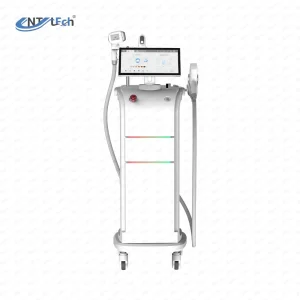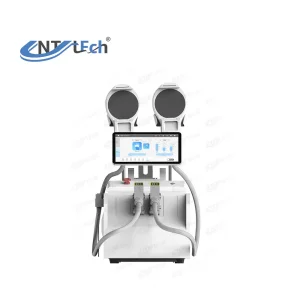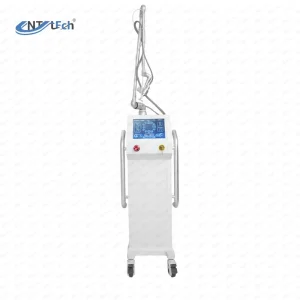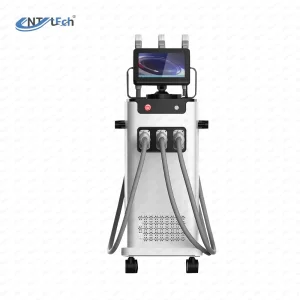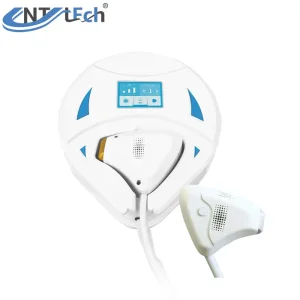
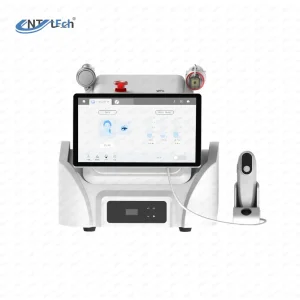
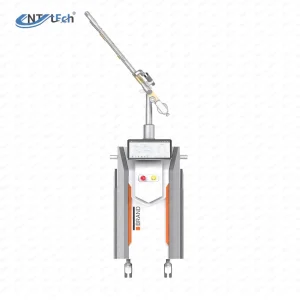
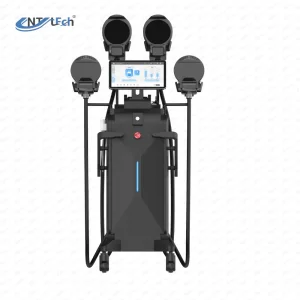
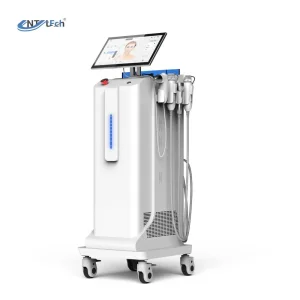
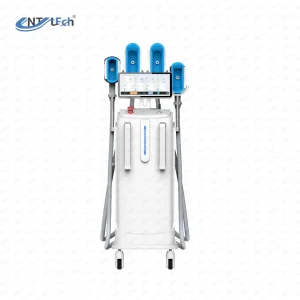
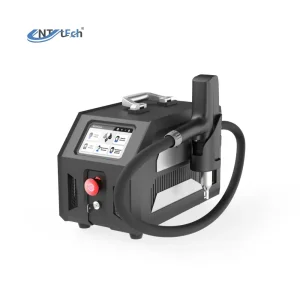
As global aesthetic medicine shifts rapidly toward ultra-low downtime, micro-invasive, and targeted cellular remodeling, healthcare procurement directors and medical equipment distributors face critical sourcing decisions between Picosecond Laser physics and Fractional Radiofrequency (RF) Microneedling technologies.
Pico Laser technology operates within the picosecond realm (10⁻¹² seconds), relying on stress wave propagation to shatters melanin and pigment granules photomechanically without thermal side-effects, establishing the gold standard for recalcitrant pigment and dermal rejuvenation.
RF Microneedling bypasses epidermal impedance by delivering insulated or non-insulated gold-plated microneedles directly into the reticular dermis. It emits controlled 1MHz–5MHz radiofrequency thermal energy, stimulating immediate collagen triple-helix contraction and neocollagenesis.
With stricter Medical Device Regulations (EU MDR 2017/745) and stringent FDA 510(k) clearances, global procurement requires factories capable of producing certified high-output generators, bio-compatible materials, and zero-defect optical components.
Understanding the physics behind laser-tissue interaction versus electro-thermal impedance matching is vital for procurement heads balancing capital expenditure (CapEx) and operational returns (OpEx).
| Evaluation Parameter | CE Certified Pico Laser (Picosecond) | CE Certified RF Microneedling |
|---|---|---|
| Primary Energy Source | Nd:YAG Dual Wavelength (1064nm / 532nm) or Alexandrite (755nm) | Fractional Bipolar / Monopolar Radiofrequency (1MHz - 5MHz) |
| Mechanism of Action | Photomechanical / Photoacoustic Effect (Acoustic shockwaves break pigment) | Electro-Thermal Coagulation + Mechanical Micro-injury |
| Target Chromophore / Depth | Melanin, Ink pigments; Epidermis to Upper Dermis (Limbus optics) | Non-chromophore dependent; Dermal matrix (0.5mm to 4.0mm adjustable) |
| Primary Clinical Intent | Tattoo removal, Melasma, Nevus of Ota, Post-inflammatory Hyperpigmentation (PIH) | Deep acne scarring (ice-pick, boxcar), Skin laxity, Rhytids, Striae Distensae |
| Skin Type Suitability | Fitzpatrick I - VI (Extremely safe for dark skin tones under 1064nm) | Fitzpatrick I - VI (Zero risk of thermal PIH when using insulated needles) |
| Typical Recovery Downtime | 2 to 24 hours (Mild erythema, non-ablative fractionated handpiece) | 24 to 72 hours (Transient erythema, micro-crusting) |
| Consumable Costs | Low (Optical lamp replacements every 1-3 million pulses) | Per-patient consumable (Sterile gold-plated cartridge tips: 10, 25, 64 pin) |
| Factory Technical Challenge | Picosecond seed laser stability, high-energy optics cavity sealing, pulse width <450ps | Precise stepper motor pulse depth control, RF frequency phase locking, bio-impedance matching |
When specifying equipment for hospital chains or commercial medspa networks, engineering durability dictates long-term ROI. A Picosecond Laser platform requires robust optical alignment chambers resistant to mechanical vibration during shipping. The laser head must maintain ultrashort pulse widths (typically 300ps–450ps) to prevent thermal dissipation into surrounding tissue. This photomechanical disruption converts high-peak-power energy into pressure waves, shattering targeted pigment into micro-particles that are rapidly phagocytosized by macrophages.
Conversely, RF Microneedling systems depend heavily on micro-stepper motor precision and electrical insulation integrity. Premium ODM/OEM factories utilize robotic assembly for the needle deployment mechanism, ensuring microneedles penetrate the dermis at precise sub-millimeter depths (0.2mm increments up to 4.0mm) without tearing skin tissue. Advanced impedance-sensing algorithms dynamically adjust RF output based on real-time tissue resistance, optimizing thermal denaturation zones while protecting the delicate dermal-epidermal junction (DEJ).
Procurement directors representing international medical aesthetic conglomerates must evaluate manufacturers against strict global compliance protocols, risk mitigation strategies, and supply chain transparency.
Essential for legal distribution within the European Economic Area (EEA). Ensures rigorous clinical evaluation, safety testing (EN 60601-1, EN 60601-2-22), and post-market surveillance (PMS).
Crucial for penetration into the US healthcare market. Demonstrates substantial equivalence to legally marketed predicate devices, supported by bench testing and safety audits.
Comprehensive quality management systems validating cleanroom manufacturing, trace-ability, raw material verification, and zero-defect assembly workflows.
Ability to customize industrial housing design, UI software (Android platform base), language localizations, custom spot sizes, and private label branding.
As a beacon of innovation in the medical aesthetic equipment sector, Beijing UNT Technology Co., Ltd combines deep R&D with large-scale high-precision manufacturing facilities in Beijing, China.
Our Beijing facility incorporates ISO Class 7 cleanrooms dedicated to optical cavity assembly and sensitive electronics wiring. Utilizing lean manufacturing principles, we achieve scalable production capacity from small custom batches to annual outputs exceeding 50,000 units with strict batch-to-batch repeatability.
From in-house printed circuit board (PCB) design, custom optical lens coatings, to ergonomic handpiece injection molding, vertical integration enables UNT Technology to reduce production lead times, control raw component costs, and rapidly prototype emerging aesthetic technologies.
To support our European distributors and clinicians, UNT established the "APEX" Service Hub in the Netherlands. This facility offers local stock availability, on-site device demonstrations, clinical training, and rapid door-to-door maintenance across EU member states.
Every device undergoes continuous 72-hour aging tests, energy output stability verification using power meters, high-voltage insulation safety checks, and vibration stress testing to guarantee 100% operational reliability prior to global dispatch.
From our incorporation in 2015 to establishing worldwide service hubs and multi-country medical certifications.
UNT Technology was officially registered and established in Beijing and Hong Kong, China, focusing on advanced optoelectronic research.
Independently engineered and successfully commercialized high-efficiency Intense Pulsed Light (IPL) photo-rejuvenation systems.
Pioneered the "Alpha" series diode laser handpiece integrated with a color touch-screen display, setting an ergonomic industry benchmark.
Engineered a full suite of medical aesthetic lasers, including Q-switched Nd:YAG, Pico Lasers, and Fractional CO2 platforms.
Introduced the world's first Android-based operating system for diode laser platforms, enabling cloud telemetry and remote diagnostics.
Expanded headquarters and manufacturing base to 6,000 square meters, growing the expert workforce to over 130 dedicated specialists.
Secured FDA 510(k) clearance for 4 core platforms: Diode Laser, Museshape EMS, Q-switched Nd:YAG, and Cryolipolysis Slimming systems.
Achieved Medical CE under EU MDR requirements and ISO 13485 MDSAP certification; opened the APEX Service Center in the Netherlands.
How premier dermatological practices, medical spas, and aesthetic chains integrate Pico Lasers and RF Microneedling to deliver treatment protocols across diverse skin phototypes.
Primary Platform: CE Certified Picosecond Laser Machine.
Clinical Indication: Multi-color tattoo removal, dermal melasma, solar lentigines, and post-acne hyperpigmentation.
Practice Impact: Rapid pulse speed minimizes treatment sessions by 50% compared to traditional Q-switched lasers, resulting in superior patient compliance and high revenue per session.
Primary Platform: Medical RF Microneedling Machine.
Clinical Indication: Atrophic acne scars, periorbital wrinkles, skin laxity along the jawline, and body striae distensae (stretch marks).
Practice Impact: Insulated needle tips allow safe treatment during high-UV summer months without risk of post-inflammatory hyperpigmentation, maintaining steady clinic workflow year-round.
Primary Platform: Synergistic Multi-Technology Suite.
Clinical Indication: Total facial rejuvenation (epidermal tone correction via Pico Laser + dermal tighting via RF Microneedling).
Practice Impact: Clinics offering combined sub-ablative energy protocols command premium package pricing while delivering multi-layer tissue regeneration.
Excerpts from international medical distributors, clinic chains, and medical device auditors evaluating Beijing UNT Technology.
"Quality control is a top priority at Beijing UNT Technology Co., Ltd. Every product undergoes a series of rigorous tests at various stages of the production process. From raw material inspection to final product testing, we leave no stone unturned to ensure that our customers receive products that are reliable, durable, and safe to use. We also comply with international quality standards, such as ISO 13485 for medical devices, which further attests to our commitment to quality."
"Our production capacity is highly scalable, allowing us to meet the growing demands of the market. Whether it is a small-scale order for a specialized medical device or a large-scale supply of aesthetic equipment for a chain of beauty clinics, we have the resources and expertise to deliver on time and to the highest quality standards."
"Once a customer has purchased our product, our commitment to service does not end. Our after-sales service team is available 24/7 to provide technical support and assistance. We offer on-site installation and training services to ensure that our customers can use our products effectively. In the event of any issues, our after-sales team responds promptly, sending technicians to the customer's location to resolve the problem as quickly as possible."
"We regularly conduct customer satisfaction surveys and use the feedback received to improve our products and services. This continuous improvement process allows us to stay ahead of the competition and meet the evolving needs of our customers. Furthermore, fast delivery (3-5 days via DHL/FedEx) and local support through the Netherlands hub give us total operational confidence."
Key questions answered for procurement managers, medical engineers, and aesthetic business owners.
 UNT TECH