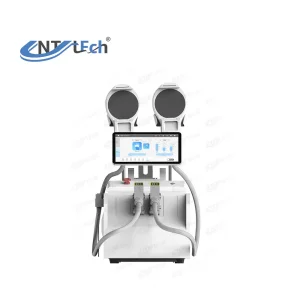
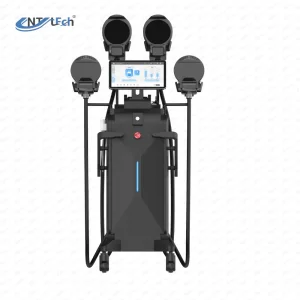
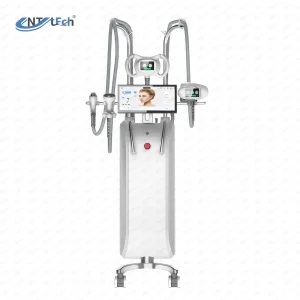
Explore factory-direct CE-certified aesthetic systems designed for professional dermatology centers, medspas, and distributor networks globally.
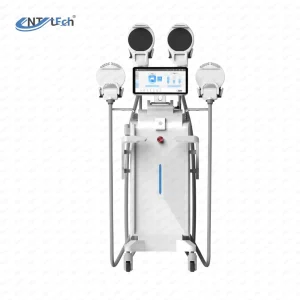
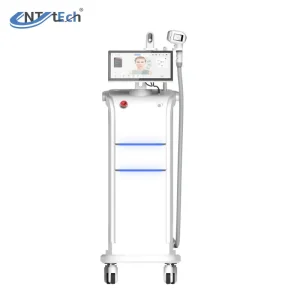
The global market for tattoo removal devices has entered a phase of rapid structural expansion. Driven by evolving aesthetic trends, rising rates of "tattoo regret," and shifts in professional workplace standards, the demand for non-invasive, highly effective laser solutions has surged. According to recent market analysis, the global tattoo removal market size is projected to expand at a compound annual growth rate (CAGR) exceeding 9.4% through 2030, transitioning from a niche dermatological service to a core operational module in commercial MedSpas, cosmetic surgery clinics, and specialized tattoo modification centers.
The market transition from traditional nanosecond Q-Switched lasers to advanced picosecond technology has reduced average treatment cycles from 10–12 sessions down to 4–6 sessions while vastly reducing epidermal trauma risk.
Procuring CE-marked, factory-direct machinery enables clinic operators to compress capital expenditure (CapEx) payback periods to under 5 months, maintaining gross profit margins above 82% per procedure.
Modern clinical buyers prioritize dual and quad-wavelength systems (1064nm, 532nm, 755nm, 585/650nm) capable of shattering complex multi-color pigments across dark, bright, and recalcitrant ink matrices.
In the international medical aesthetic market, CE Certification is not merely a marketing label; it is a legal requirement for market access within the European Economic Area (EEA) and serves as a global proxy for device safety, electromagnetic compatibility (EMC), and clinical efficacy. Under the updated European Medical Device Regulation (EU MDR 2017/745), which replaced the legacy Medical Device Directive (MDD 93/42/EEC), high-energy optical devices such as Q-Switched Nd:YAG and Picosecond lasers face stringent classification requirements.
Purchasing non-certified or improperly labeled laser equipment exposes clinics to legal liabilities, voided insurance policies, and operational shutdown by regional health authorities. Authentic CE certification mandates compliance with IEC/EN 60601-1 (Electrical Safety), IEC/EN 60601-1-2 (Electromagnetic Compatibility), and IEC/EN 60601-2-22 (Particular requirements for basic safety and essential performance of surgical, cosmetic, therapeutic and diagnostic laser equipment).
A genuine CE-certified tattoo removal system from a verified factory includes a comprehensive Technical Construction File (TCF). This document details photothermal risk assessments, laser radiation hazard zoning (NOHD - Nominal Ocular Hazard Distance), internal beam alignment stability tests, and thermal dissipation metrics.
Top manufacturing facilities operate under ISO 13485:2016 (Medical Devices Quality Management Systems) and MDSAP (Medical Device Single Audit Program). This guarantees that every device shipped undergoes traceable quality gates—from raw laser rod inspection to final energy joule output calibration.
Understanding the pricing architecture of medical laser equipment is paramount for wholesale buyers, brand distributors, and clinic owners. Pricing variations across the industry are driven by key factors including optical pump source origin, pulse duration integrity, internal cooling system capacity, and regulatory clearance packages.
| Equipment Category | Technical Characteristics | Typical Factory FOB Price Range | Retail/Distributor Market Price | Target Clinical Application |
|---|---|---|---|---|
| Portable Mini Q-Switched Nd:YAG | Single rod, passively Q-switched, 1064/532nm, 5–10ns pulse width, air+water cooling | $1,500 – $3,500 | $5,000 – $10,000 | Small cosmetic studios, eyebrow/line tattoo removal, starter medspas |
| Professional Vertical Q-Switched System | Dual-lamp/Dual-rod architecture, active cooling unit, up to 1600mJ energy output | $4,500 – $8,500 | $12,000 – $22,000 | High-volume commercial clinics, specialized body art revision centers |
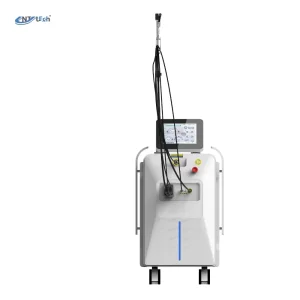
| Ultra-Short Picosecond Medical Platform | Real Picosecond pulse width (<450ps), imported articulated arm, multi-wavelengths | $9,500 – $18,500 | $28,000 – $55,000+ | Dermatology hospitals, premium aesthetic institutes, stubborn recalcitrant ink removal |
| Multi-Technology Workstation (Laser + RF/IPL) | Modular multi-handpiece system combining Nd:YAG laser with Diode or RF systems | $6,500 – $14,000 | $18,000 – $38,000 | Comprehensive multi-treatment aesthetic clinics seeking maximum device versatility |
When evaluating supplier quotes for CE-certified tattoo removal machinery, purchasing teams must assess the component layer behind the outer shell:
In the global landscape of medical and aesthetic device manufacturing, Beijing UNT Technology Co., Ltd. stands as a benchmark high-tech enterprise. Founded in 2012, UNT has systematically advanced the state of non-invasive aesthetic engineering through continuous optical R&D, rigorous quality frameworks, and scalable global technical support.
Spanning an expansive 6,000 square meters in Beijing, China, UNT houses state-of-the-art production lines, precision optical testing suites, and dedicated ISO Class 7 cleanroom assembly zones (100 m²). Operating under lean manufacturing protocols, UNT ensures strict quality assurance from raw material intake to final burn-in energy calibration.
The factory boasts annual production capacity scalable from short-run custom batches (50 units) to high-volume OEM/ODM commercial runs exceeding 50,000 units annually, serving distributors and clinical brands in over 100 countries.
To eliminate European client downtime, UNT established its dedicated European Service Center, APEX, situated in the Netherlands. This hub provides direct localized machine demonstrations, rapid replacement part distribution, and regional door-to-door technician repair services.
Company incorporation in Beijing & HK; focus on precision display & core electronic system integration.
Independent development of IPL therapy systems and launch of the flagship "Alpha" touch-screen diode laser handpiece system.
Expansion into comprehensive medical laser equipment. Launch of "SmartDepi"—the world's first Android OS integrated aesthetic device ecosystem.
Production facility expansion to 6,000m²; achieved four major FDA 510(k) clearances across Diode Laser, MuseShape, Nd:YAG, and Cryo Slimming platforms.
Attained ISO 13485 (MDR basis) and MDSAP certifications; achieved MDR CE clearance; launched the APEX European Service Center in the Netherlands.
Iterative CAD/CAM modeling, 3D printing prototyping, and ergonomic optimization for intuitive clinical operation.
Optical laser systems assembled inside ISO Class 7 cleanrooms to protect sensitive mirrors and laser rods from micro-dust contamination.
Built-in compliance design adhering to CE, FDA 510(k), TGA, and IEC 60601-1 standards right from raw circuit architecture.
Every machine is assigned a unique Serial Number (SN) for full lifecycle component tracking and instant after-sales diagnostic support.
Modern tattoo removal technology relies on selective photothermolysis combined with acoustic shockwave physics. When high-peak-power laser energy is delivered into the dermis within nanosecond or picosecond pulse durations, ink particles absorb the light energy, undergo rapid thermal expansion, and shatter into microscopic fragments. These fragmented particles are subsequently phagocytosed and cleared by the body's lymphatic drainage system.
Different ink pigments exhibit distinct spectral absorption coefficients. A clinical-grade laser system must provide precise wavelength switching:
Optimizing patient outcomes across diverse clinic environments requires adaptable operational workflows:
Clear, authoritative answers to common procurement, compliance, and technological questions submitted by global aesthetic equipment distributors and clinic buyers.
To verify CE validity, request the official CE Certificate and the corresponding Test Reports from the supplier. Check that the certificate is issued by a recognized European Notified Body (for medical devices under MDR) or an accredited compliance body. Ensure that the manufacturer name (e.g., Beijing UNT Technology Co., Ltd.), device model number, and scope of standard compliance (such as EN 60601-1 and EN 60601-2-22) match the product documentation exactly.
The fundamental difference lies in the pulse duration (width). Q-Switched lasers operate in the nanosecond range (10^-9 seconds), relying primarily on photothermal mechanisms to heat and break ink particles. Picosecond lasers operate in the picosecond range (10^-12 seconds), delivering energy so rapidly that it creates a predominantly photoacoustic shockwave. This shatters ink into fine "dust-like" particles with significantly lower thermal dispersion to surrounding tissue, resulting in faster clearing and fewer side effects.
Leading manufacturers like Beijing UNT Technology offer comprehensive OEM/ODM customization. This includes custom exterior casing designs and paint finishes, hardware configurations (e.g., single vs. dual rod, imported lamp source), custom branded software interfaces (GUI logo integration, language localization, custom preset treatment protocols), handpiece design, and tailored user authorization systems (such as IC card or RFID management).
Reputable OEM/ODM manufacturers provide a comprehensive warranty package (typically 2 years quality assurance) coupled with lifetime technical maintenance support. Leading suppliers offer 24/7 technical assistance, door-to-door express delivery (3–5 business days via DHL/FedEx/UPS/TNT), online training courses with certification, and local service center support (such as UNT's Netherlands-based APEX center for European clients).
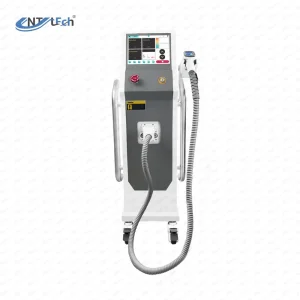
Discover additional factory-direct aesthetic platforms engineered to high international standards.
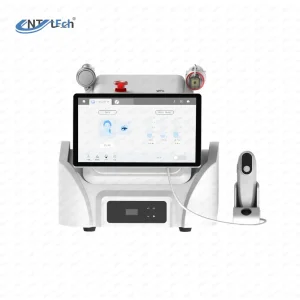
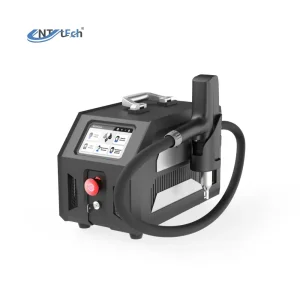
 UNT TECH