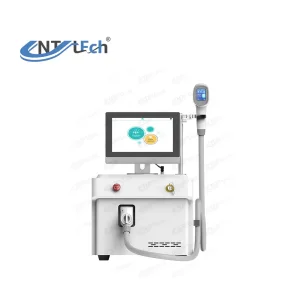
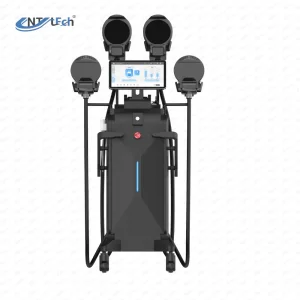
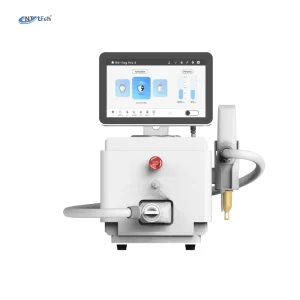
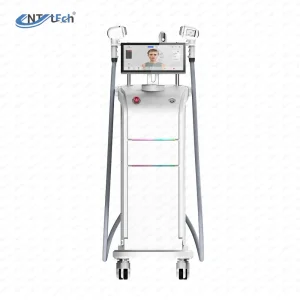
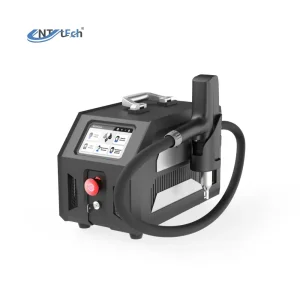
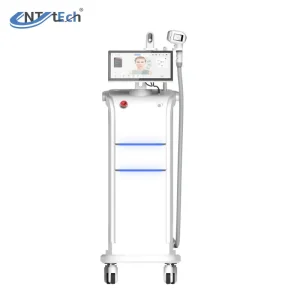
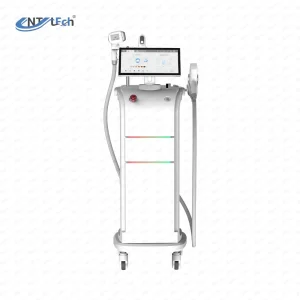
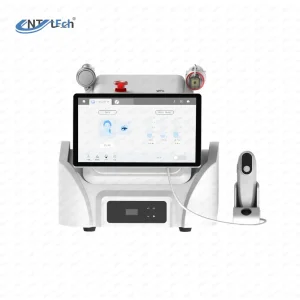
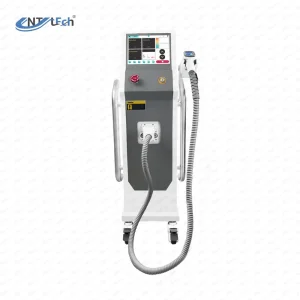
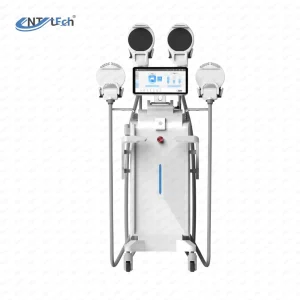
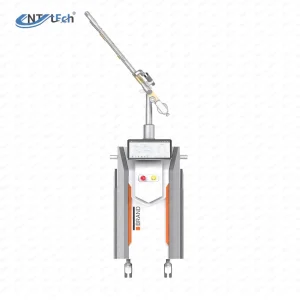
Explore our flagship OEM/ODM medical-grade lasers, EMS sculpting, and body slimming technology systems engineered for global distributors.
Analysis of search intent, commercial adoption, and high-frequency acoustic cavitation manufacturing benchmarks for aesthetic equipment OEM buyers.
In the non-invasive body contouring market, ultrasonic cavitation has established itself as an indispensable core technology alongside Diode Laser Hair Removal, Cryolipolysis, and EMS Muscle Building platforms. B2B importers, aesthetic device brands, and clinical chains seeking a reliable OEM Ultrasonic Cavitation Device Factory must look beyond basic external casing design. Superior manufacturing standard requires deep acoustic engineering expertise: piezoelectric transducer impedance matching, heat dissipation control within transducers, phase-locked loop (PLL) automatic frequency tracking circuits, and precise wave phase focus.
Beijing UNT Technology Co., Ltd. leads the industrial production of aesthetic ultrasound and laser machines by combining high-precision manufacturing, vertically integrated component sourcing, and medical-grade quality assurance protocols. By bridging advanced software platforms—such as our proprietary Android-based SmartDepi control systems—with multi-frequency acoustic transducers, UNT provides brand partners with competitive market differentiation and uncompromised safety standards.
Deep-dive engineering principles: Micro-bubble cavitation dynamics, frequency tuning, and multi-energy convergence platforms.
Ultrasonic cavitation relies on localized low-frequency sound waves (typically 28 kHz to 40 kHz) transmitted through skin tissues into subcutaneous adipose layers. The alternating high-pressure and low-pressure cycles generate microscopic vapor bubbles inside fat cell membranes. During implosion (stable vs. transient cavitation), localized shockwaves fracture adipocyte cell walls, releasing emulsified triglycerides into interstitial fluid for lymphatic metabolism without disrupting adjacent microvascular structures.
The core component of any OEM cavitation device is the ceramic piezoelectric transducer (PZT). Sub-standard factories often suffer from frequency drift, where thermal dissipation shifts acoustic output away from optimal target resonance, causing treatment inconsistency or transducer burnout. UNT engineering incorporates real-time phase locking and impedance monitoring, guaranteeing continuous resonant stability at precise energy outputs over extended operational hours.
Modern clinical demand requires multi-modality treatments. UNT's technology roadmap fuses low-frequency ultrasonic cavitation with multipolar Radio Frequency (RF), vacuum suction therapy, and 635nm low-level diode laser irradiation. This combined synergistic architecture simultaneously breaks down fat, stimulates dermal collagen synthesis, accelerates lymphatic drainage, and tightens sagging cutaneous layers.
| Acoustic Technology Parameter | Standard Commercial Grade | UNT OEM/ODM Factory Specification | Clinical & Operational Advantage |
|---|---|---|---|
| Operating Frequency | Fixed 40 kHz Static Frequency | Dynamic Auto-Tuning (28 kHz - 40 kHz ± 1.5 kHz) | Eliminates energy degradation, adapts to varying adipose densities. |
| Transducer Material | Generic PZT-4 Ceramic Discs | High-Q Factor PZT-8 Piezoelectric Crystals | Prevents thermal overheating, extends applicator lifespan by >300%. |
| Software Architecture | Basic Microcontroller Unit (MCU) | SmartDepi Android OS + Cloud Telemetry | Remote UI updating, multi-user protocol saving, diagnostic logging. |
| Safety Mechanisms | Basic Fuse & Manual Thermal Cutoff | Integrated Contact Impedance & Temp Sensors | Protects epidermis from accidental thermal damage during low-motion passes. |
| Regulatory Standards | Basic LVD CE Certification | ISO 13485:2016, FDA 510(k), MDR CE Approved | Enables immediate legal distribution in North America, EU, and Asia-Pacific. |
From high-end medical spas in North America to specialized rehabilitation aesthetic clinics across Europe and LATAM.
Medical spas demand reliable, non-invasive systems with zero operator fatigue. Dual-handle ergonomic cavitation applicators allow technicians to target localized abdominal fat deposit zones, flank love handles, and stubborn thigh subcutaneous tissue with low acoustic pressure reflection back to the practitioner’s hand.
Plastic surgery centers utilize targeted non-focused acoustic cavitation at reduced energy levels to smooth post-liposuction tissue unevenness, accelerate edema resorption, break up postoperative fibrous banding, and optimize overall skin contours following invasive procedures.
Miniature 80 kHz cavitation micro-applicators integrated with vacuum cooling allow clinical specialists to offer submental fat reduction (double chin contouring), jawline sharpening, and cheek sculpting without bruising or thermal risk to facial micro-nerves.
Because regional regulations differ drastically between the US FDA, European CE MDR, South American ANVISA, and Australian TGA, an experienced OEM Ultrasonic Cavitation Device Factory must supply modular software presets, localized plug standards, voltage transformers (110V/220V wide frequency input), multi-language software localized in 15+ languages, and custom physical branding.
Scale, Precision, and Agility: How UNT transforms medical aesthetic device manufacturing through scalable production and cleanroom controls.
In the dynamic and ever-evolving landscape of the global medical and aesthetic equipment industry, Beijing UNT Technology Co., Ltd has emerged as a trailblazer, setting new standards for innovation, quality, and customer service. As a high-tech enterprise, our unwavering commitment to excellence is reflected in every aspect of our operations, from research and development to production, sales, and after-sales support.
Complementing our strong R&D capabilities is our large-scale production facility. Spanning an impressive 6,000 square meters in the heart of Beijing, China, our comprehensive office houses a state-of-the-art production line equipped with the latest manufacturing technology to ensure scalability from 50 prototype units up to 50,000+ volume units annually.
Quality control is a top priority at Beijing UNT Technology Co., Ltd. Every product undergoes a series of rigorous tests at various stages of the production process. From raw material inspection to final product burn-in testing, we leave no stone unturned to ensure that our customers receive products that are reliable, durable, and safe to use.
Laser systems, high-frequency RF drivers, and ultrasonic transducer assemblies are constructed in ISO Class 7 cleanrooms to prevent particulate contamination. We strictly comply with international quality standards, such as ISO 13485 for medical devices, guaranteeing absolute batch consistency.
UNT integrates an end-to-end manufacturing workflow. Prototypes are developed using CAD/CAM software and advanced 3D printing, with iterative testing to optimize ergonomic handling and functional efficiency.
Our production team consists of experienced engineers well-versed in lean manufacturing techniques. By manufacturing internal control boards, optical pathways, and custom aluminum housings in-house, we reduce production cycles, lower unit production costs, and pass significant economic efficiency to our OEM partners worldwide.
3D CAD chassis modelling, custom color selection, thermal airflow simulations, and ergonomic handle design.
Custom Android GUI development, SmartDepi integration, multi-language UI localization, and algorithm programming.
Acoustic transducer mounting in ISO Class 7 cleanrooms followed by continuous 72-hour stress and thermal burn-in testing.
Fast 3-5 days DHL/FedEx/UPS express shipping, MDR CE certification packaging, and European APEX local support hub.
Over a decade of continuous technological breakthroughs in high-energy aesthetic laser and acoustic engineering.
UNT was officially registered and established in Beijing and Hong Kong, China, laying the foundation for aesthetic R&D.
UNT developed intense pulsed light (IPL) therapy systems independently, entering global distributor markets.
Pioneered diode laser hair removal handles with integrated touch screen control, designated as the "Alpha" series.
Expanded product matrix to cover full spectrum Nd:YAG lasers, Q-Switched tattoo removal, and aesthetic cavitation devices.
Launched "SmartDepi"—the world's first Android Operating System integrated into aesthetic diode laser & body contouring devices.
Expanded manufacturing headquarters to 6,000 square meters in Beijing, growing the dedicated engineering workforce to 130+ experts.
Secured 4 US FDA 510(k) clearances covering Diode Lasers, Museshape EMS, Nd:YAG Laser, and Freezing Slimming systems.
Achieved ISO 13485 (MDR) and MDSAP compliance. Established the European Service Center "APEX" in the Netherlands for local support.
Complete peace of mind for B2B importers: Worldwide logistics, door-to-door maintenance, and regulatory conversions.
Partnership with Tier-1 express carriers: DHL / FedEx / TNT / UPS / EMS 3-5 Days Fast Delivery with complete insured door-to-door transport and dangerous goods clearance for optical components.
Located in the Netherlands, our APEX Customer Service Center offers on-site machine testing, immediate replacement parts, and direct door-to-door technician repair services throughout the European Union.
Our dedicated after-sales engineering team provides 24/7 online technical support, video operation guidance, and comprehensive clinical class certification for your staff and purchasing client network.
Every UNT machine is backed by FDA, CE, MDR, TGA, and ISO13485 approvals, complete with a 2-year quality assurance warranty and lifetime technical maintenance.
Addressing core procurement inquiries, technical specifications, MOQ requirements, and compliance protocols for ultrasonic cavitation machinery.
Select from our complete range of certified medical lasers, microneedling RF, EMS sculpting, and cavitation units.
 UNT TECH